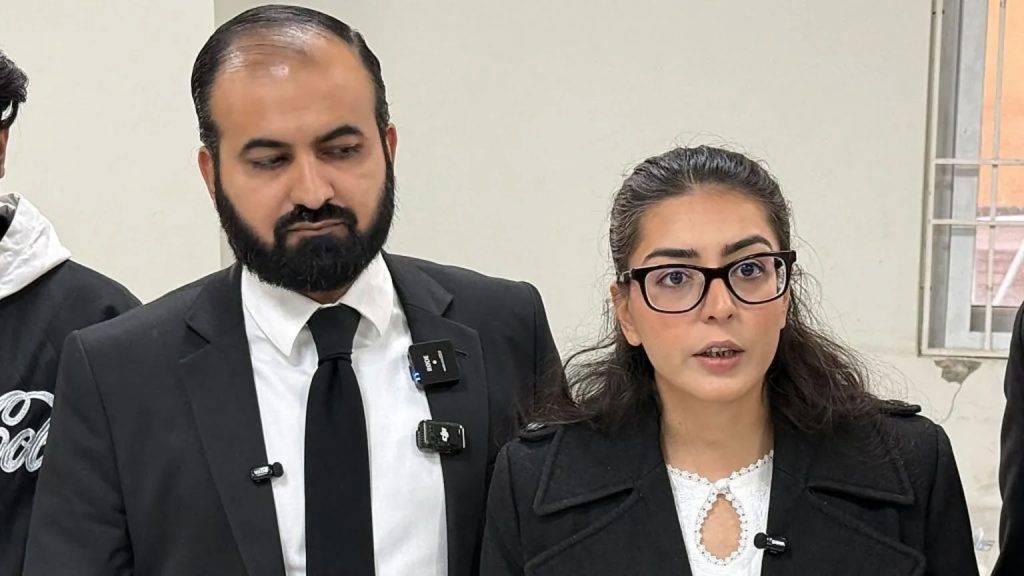
“What do you think, where did Imaan Mazari go wrong?” someone asked me, referring to her sentencing by an anti-terrorism court in Rawalpindi.
The short answer to that incorrect question is that Imaan Mazari did nothing wrong. But because the system in Pakistan is running under militia-mindset political leaders, any form of dissent is, in their eyes, tantamount to causing harm. Imaan’s only crime was questioning the ‘powerful state institutions’ regarding gross human rights violations and the misuse of laws, particularly concerning enforced disappearances and extrajudicial murders.
Her activism was thought to be crossing “political and legal lines,” for which she and her husband, Advocate Hadi Ali Chattha, were sentenced to ten years in prison on October 29. The court concluded that they were guilty of ‘obstruction to government servants from duty’ in 2024 by removing road blockades during the England cricket team’s tour of Pakistan.
Imaan Zainab Mazari-Hazir is a lawyer and human rights activist, and the daughter of two “proud Pakistani parents”. Her father, Dr Tabish Aitbar Hazir, served as a medical professional and died in December 2022, and her mother, Shireen Mazari, is a senior politician who served as a federal minister for Human Rights.
She started her human rights campaign years ago, and that was fine with everyone, the politicians, the establishment, the lawyers, the global human rights activists, and Pakistani civilians. Everything was good. She was getting recognition for her activism. Nothing was thought to be contrary to the state, to its laws, or to its citizens. But then came the twist.
Baloch students studying in Punjab started becoming victims of enforced disappearances. One. Two. Three. Four. Five.
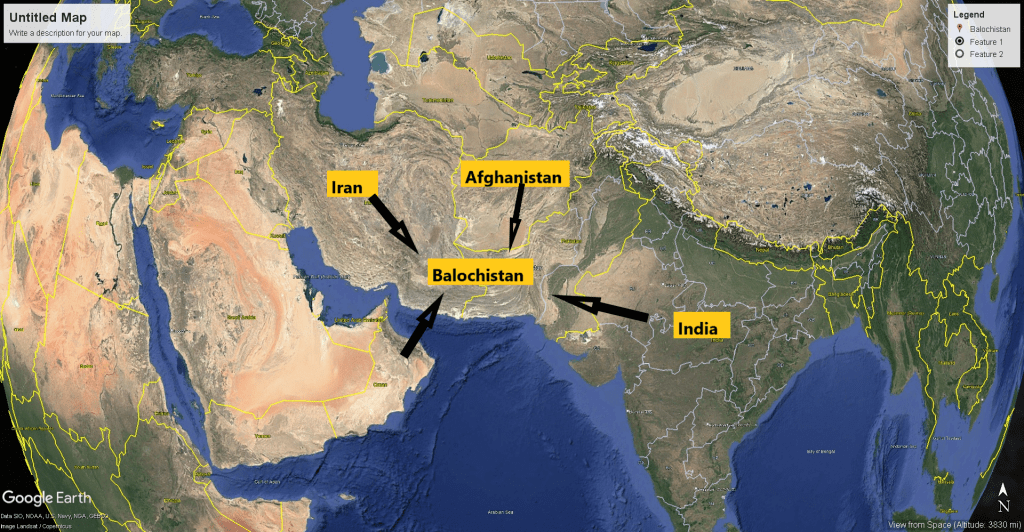
Baloch parents were confused. “Should we educate our children or not?” Because their sons were now not safe from abduction outside Balochistan either. They felt hopeless as enforced disappearances, torture, and extrajudicial killings by security personnel grew.
Baloch families, after years and years of seemingly fruitless protests in Balochistan, went to Islamabad to try their luck in the country’s capital. Elderly mothers. Children. Infants. Sisters. Brothers. Fathers. All carried posters of their ‘missing’ loved ones, in blind hope for their recovery, despite having no idea whether they were alive or dead. But they were clear that their loved ones were in the custody of law enforcement agencies and could not be abandoned to the state’s mercy. They were ready to knock on all doors, hoping “their screams might touch deaf ears”.
They chose Islamabad’s D-Chowk for their protest. The authorities beat them up and even used water cannons in Islamabad’s winter. Quivering with sickness, the elders, the infants, and the youth all came together and demanded to be heard. Just heard. No perks. No privileges. No gas. No royalties. No gold. No mega projects. No sea. Just a simple plea that their children be released from illegal custody. Yet it seemed most of Islamabad was afraid of these helpless protesters, as if they were some kind of mob making senseless demands.
Imaan Mazari stepped ahead as a ray of hope for them, fighting their cases in court and forcing national and international media coverage for the grieving families. She sat with them, felt their pain, and called herself ‘one among them.’
The families were very accepting. They embraced anyone who felt their pain. Imaan is a Baloch herself. When most turned their faces away, Imaan and Hadi stood up and fought for their just cause. The couple is now facing the consequences of this particular action.
Imaan received love from the Baloch for her bold and courageous steps. She was invited to Baloch ceremonies as chief guest. She was celebrated across Baloch regions. She eventually became a well-known figure in Balochistan, all because of standing with the families at a time when they were vulnerable.
Imaan placed herself inside Baloch hearts, but hurt the corridors of power.
Baloch parents’ pleas reached higher forums. Pressure developed globally. The United Nations and Amnesty International called Pakistan out. Europe warned Pakistan its GSP+ status would be at risk if rights violations continued. Voices were raised in the UK’s parliament about the Baloch. Africa shared the common pain. Global human rights groups and people condemned the Pakistani state’s barbarism against Baloch families.
Though international pressure seemed to have little significance for Pakistan, internal pressure did. Islamabad’s masses stood with the Baloch families. Sindh, Khyber-Pakhtunkhwa, Gilgit-Baltistan, and Kashmiris all showed solidarity with the families of Baloch victims.
Once prominent Baloch leader Dr Mahrang Baloch was arrested, Imaan replaced her as a voice for the Baloch families.
That is where Imaan went beyond the “legal and political lines”, that is why she and her husband are in prison as “terrorists”.
They are not prisoners of law, but of conscience.

The writer is a journalist.